Posts

Showing posts with the label World Myths

Happy Winter Solstice

Image
Because winter is the darkest time of the year, the winter solstice has long been a time of great celebration, heralding the return of light to the world. Ancient cultures throughout the world and history have held celebrations of this time, most of them of days or even weeks duration. Yule In Scandinavia, the party lasted from Dec. 21 into January. In many places, a sacrifice was made at the end of the festival on Mid-Winter Night, (Jan. 12). The sacrifice was originally probably human, (accounts say that Swedish Kings sacrificed male slaves every 9th year, for example), but became a boar, (think "Boar's Head Carol"). Germanic peoples celebrated the holiday from Dec.-Jan. on a date chosen by their lunar calendar. Records also reflect that the holiday was celebrated in Iceland. The root of the word is the same as the root of the word "jolly" and other traditions based in Yule include decorating fir trees, hanging mistletoe and holly and giving gifts. (We ...

Dragons - Divine Beings

Image
Dragons are probably the single most important mythical creatures in Chinese culture. They appear in multiple national celebrations, Chinese idioms (known as Chengyu), as well as being part of the Chinese zodiac. They adorn multiple buildings and doors as carvings, are weaved into fabrics for traditional Chinese clothes, and are painted in murals and used in dances to this day. Unlike their Western or European counterparts, Chinese dragons are loved and worshiped. Chinese people consider themselves to be descended from the dragon. It is the symbol of emperors and imperial rule, and its legends have shaped a good portion of modern Chinese culture. In Eastern culture the dragon started out as an elongated, almost serpentine creature, usually, but not always showing four shortened legs, and a spaded tail. They were covered in scales, had a crest on the head, and were brightly colored in many hues. The dragon is a positive force, and represents power, excellence, and striving for goal...

Fury of the Dragon

Image
I had an epiphany last week on a topic for the hottest part of the Season (blame climate change). The topic is the dragon or rather the western depiction of dragon. The Western Dragon is the better known in Western culture and the other version especially the Chinese dragons deserve their own post. So let's explore the dragon and some of its history. What is a Dragon? Dragons are usually thought to have wings and breathe fire. They also are said to have scales and claws. Some also have horns. Almost always they are said to be venomous. Some dragons may have two or more heads. They may also have more than one tail. They may have two, four or even more legs; however, most are known to have four legs. Dragons are said to eat things such as rats, birds, snakes, bats, or even humans, especially children. Dragons are very intelligent creatures. They live in remote areas, far away from humans, in places that are dark, damp and secluded, such as caves. Dragons were first thought of...

Rising of Aries: Prince of the Zodiacs

Image
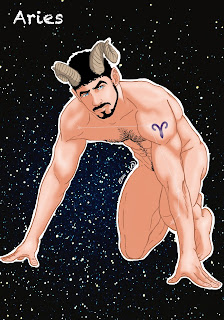
Aries The Ram Modality: Cardinal Element: Fire Ruler: Mars Season: Spring 1st Sign of Zodiac Metal: Iron Stone: Amethyst, Diamond Color: Red Anatomy: Head, face. Keywords : active, initiating, leading, independent, aggressive, impatient, combative, energetic, pioneering, naive, assertive Aries symbol is the charging Ram, who puts everything it's got into the fight or challenge of the moment.  You're an Aries if you were born sometime between March 21st and April 21st. Comparison with its symbol, the ram: Aries is symbolized by the ram. The ram has come to represent male fertility, aggression, and courage. A ram’s horn is part of a cornucopia, the “horn of plenty”, symbolizing abundance. In history, rams were often symbols of leadership. Aries natives are said to be leaders and pioneers. Rams butt their heads into their enemies, and Aries natives are thought to approach life “head-on”. The glyph for Aries is a straightforward one — it depicts the ram’s horn...

Loving flow of Oshun

Image
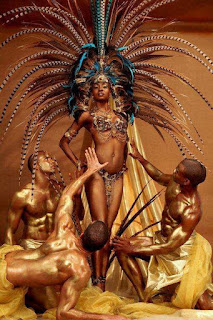
Oshun is the Yoruba Orisha (Deity) of the sweet or fresh waters (as opposed to the salt waters of her older sister Yemaya). She is widely loved, as She is known for healing the sick and bringing fertility and prosperity, and She especially watches over the poor and brings them what they need. The goddess of beauty and love, especially of the erotic kind, Oshun is extremely popular among the West African followers of the Yoruba religion. Her realm also contains the aspects of love, flirtation, sensuality, beauty and the arts.  Her priestesses dance to the rhythms of the streams, rivers, lakes and waterfalls in which She rules, and that carry Her voice with the sound of the waters. As Orisha of love, Oshun is represented as a beautiful, charming and coquettish young woman. In some tales She is said to be a mermaid, with a fish's tail. Oshun is also preeminent among the female deities of the Yoruba religion and demands the respect that title deserves. When the gods were first crea...

Happy Birthday to the Sun Gods

Image
Ra is a former pharaoh of the Egyptian gods and the most powerful god in existence. He has four aspects: Khepri as the morning god, Ra as the day god, Khnum as the evening god, and Atum as the afternoon god. To the ancient Egyptians, he represented light, warmth, and growth making him an important god and ruling over all the other gods, humans, etc. The myths of Ra represent the sunrise as the rebirth of the sun by the sky goddess Nut, thus attributing the concept of rebirth and renewal to Ra and strengthening his role as a creator god. Ra is a Protogenos (god that emerged directly from chaos). Shamash (Sumerian Utu) is the Mesopotamian God of the Sun and Justice. He brings light and warmth to the land, allowing plants and crops to grow. At sunrise Shamash was known to emerge from his underground sleeping chamber and take a daily path across the skies. As the sun fills the entire sky with light, Shamash oversaw everything that occurred during the daytime. He thus became the g...

HIstory of the Christmas Tree

Image
Long before the advent of Christianity, plants and trees that remained green all year had a special meaning for people in the winter. Just as people today decorate their homes during the festive season with pine, spruce, and fir trees, ancient peoples hung evergreen boughs over their doors and windows. In many countries it was believed that evergreens would keep away witches, ghosts, evil spirits, and illness. In the Northern hemisphere, the shortest day and longest night of the year falls on December 21 or December 22 and is called the winter solstice. Many ancient people believed that the sun was a god and that winter came every year because the sun god had become sick and weak. They celebrated the solstice because it meant that at last the sun god would begin to get well. Evergreen boughs reminded them of all the green plants that would grow again when the sun god was strong and summer would return. During the Roman festival of Saturnalia, celebrants often decorated their ...

The Colors of Christmas

Image
There are several colors which are traditionally associated with Christmas. The most common colors people uses are Red, Green and Gold. But why do we have them and what do the colors represent? Most the colors and their meanings come from the western/northern European traditions and customs, when Christmas is in the middle of winter and it's dark and cold. Green  is the symbol for nature, youth and the hope of eternal life. It is for this reason that Christmas is a feast of hope, with a newborn child as its central symbol. People observed that long after other plants have died during the winter, fir trees and holly bushes have remained evergreen. So they thought that something magical must be making these trees and bushes survive the harshest of winters. These plants were thus worshipped and feared at the same time. From then on, they have come to be associated with the mystery of life and green became the color of life. Evergreen plants, like Holly, Ivy and Mistletoe h...

Beware the tall, dark and undead

Image
Vampire the word conjures up images of suave, handsome, or strikingly beautiful creatures, such as is depicted in Anne Rice's Vampire Chronicles. Those of you who are fans of her books are quite familiar with the arrogant and sexy Lestat. One of the most famous vampires of all time is, of course, Count Dracula. The brain child of Bram Stoker who based his immortal monster on the blood thirsty ruler know as Vlad Tepes, also know as Vlad Dracula, which when translated means "son of the dragon", a nicknamed that was well earned, for the count was a blood thirsty and ruthless ruler. He was also known as Vlad the Impaler due to his habit of impaling people on very sharp stakes and letting them suffer until they died a horrible and extremely painful death. The legends of vampires were around long before Stoker wrote his book. From very early times there have been reports and tales of vampires, or vampyr, which means, when roughly translated, "blood drinker...