Posts

Showing posts with the label Roman History

Magna Mater Cybele

Image
Happy Earth Day everyone I want to introduce to you a great and feared Earth Mother: Cybele (Kybele) During the first millennium, B.C.E., or possibly even as early as the Paleolithic period, the worship of the Great Mother Goddess, Cybele, began. Cybele was originally worshipped in the form of a black meteorite, by the inhabitants of Phrygia, Lydia and the surrounding mountainous areas, which were located in the western part of the region that is now known as Turkey. This area is one of great historical significance, with the Plains of Illium, and the ancient city of Troy, lying slightly to the west. Cybele was known by several titles, in that mountainous region, including the “Great Mountain Mother,” and the "Lady of Mt. Ida," and she later gained an assortment of other names, which included the "Magna Mater (Great Mother)," “Dindymene,” “Kubaba,” and “Agdistis.” Even though Cybele had originally been worshipped as a classic Earth Mother Goddess, she eventua...

War of Spartacus

Image
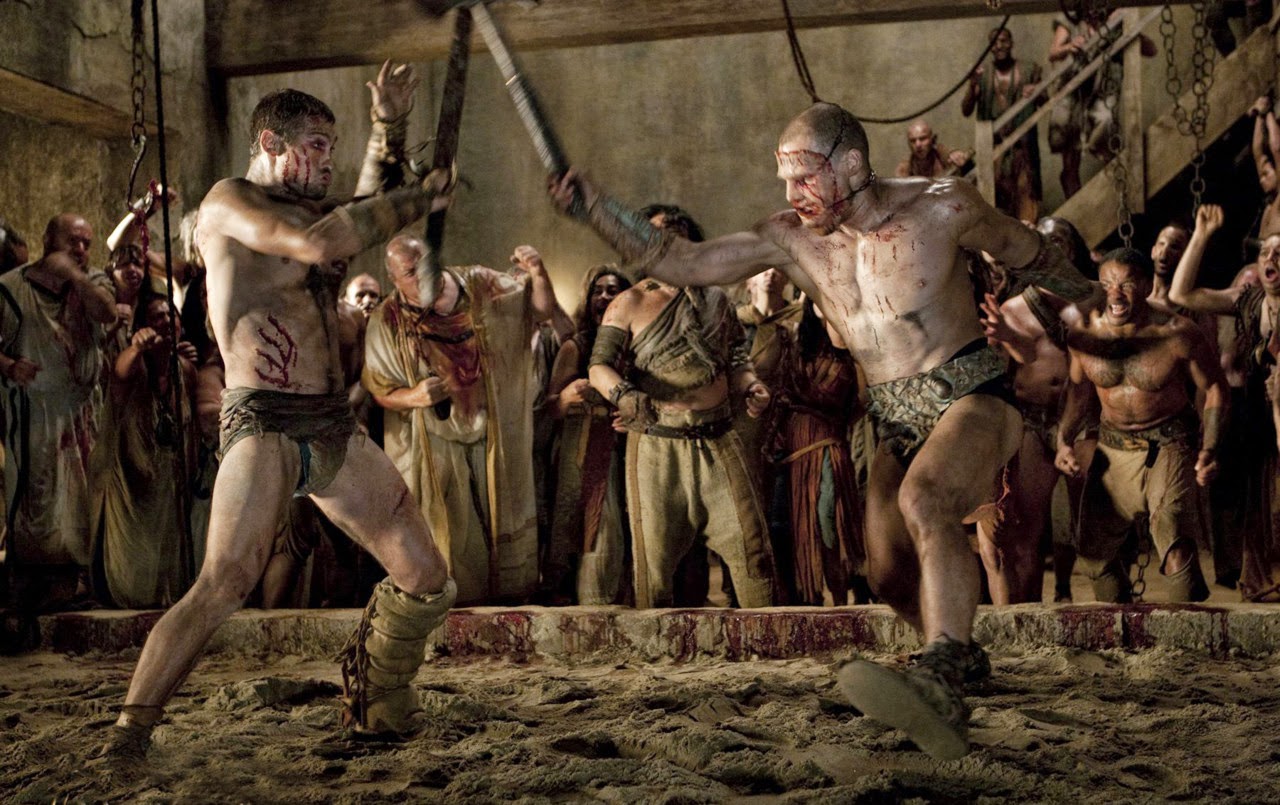
This is the real story of the Roman slave Spartacus, a biography of his life and history. There is little documented about Spartacus prior to his fame in leading a small band of gladiators and enlisting slaves to rebel against the authority of Rome. Known information has been put together to form a Timeline of Spartacus the leader of the slave uprising against the Roman Republic known as the Third Servile War and is also referred to as The War of Spartacus. Background History to Spartacus - The Servile Wars (Slave Uprisings) Here is a little history of the slave uprising. During 135 BC and 104 BC the First and Second Servile Wars, or slave uprisings, erupted in Sicily. These wars started with small bands of rebels but were joined by tens of thousands of slave followers wishing to escape the oppressive life of a Roman slave. Much of the Roman economy was based on the slave trade. It is estimated that the number of slaves in Roman Italy, at its peak, was about one and a half milli...

Roman Religion: Classical Gods

Image
As they follow the flow of Western Civilization, the gods will change slightly to reflect the culture of the country they currently reside in. Normally, this change has only a small effect and is not permanent. However, the gods have resided in Rome almost as long as they ruled from Greece, and therefore each god has a Roman aspect to themselves that they can change into. In this form, the gods became more disciplined, warlike, and militaristic ― the characteristics associated with the ancient Roman Empire. As Roman gods, they rarely interacted with mortals or had affairs with them. When they did, however, these relationships produced Roman demigods who knew of their godly parent only by their Roman name, spoke Latin, and possessed a disciplined, ferocious and orderly quality not present in the Greek demigods. These Roman demigod children were sent to be trained by Lupa, Mother Wolf  and former mother of Romulus and Remus. This section is for the main gods of Olympus. Jupi...

Roman Bloodsport: Gladiatorial Games

Image
"We who are about to die salute you!" This was the cry of the gladiators, or professional fighters, when they saluted the Roman emperor as they marched about the amphitheater before engaging in combat with one another or with wild beasts for the entertainment of the people. Many people do not realize just who ancient Roman gladiators were, or how they received that position. Most gladiators were recruited from the ranks of criminals who had lost their citizenship rights, as well as slaves and prisoners of war. The word gladiator comes from the Latin word swordsman. They did not receive the choice of choosing that position. However, some men, who did have their citizenship rights and were considered free-born, gave themselves up to the profession by swearing an oath to their master and gladiatorial troupe that they would endure branding, chains, flogging, or death by the sword. There were many advantages to engaging in that particular profession. The profession call...

Happy Birthday to the City of Rome

Image
Rome was a city on the south-east bank of the Tiber River, in the region called Latium. Roma was often called Roma, which is the proper name for the city. The site was prominently situated on the seven hills. Romulus was the legendary founder of the famed Rome. Romulus was descendant of Trojan hero, Aeneas, one of two surviving leaders to escape the fall of Troy. His tale began….. In Alba Longa, Numitor was their thirteenth king after Ascanius, the son of the hero Aeneas and founder of the city. Numitor was the father of Ilia (Rhea Silvia; this may have been her name when she became a Vestal Virgin). Amulius, Numitor's brother, plotted to have him remove. Amulius deposed Numitor and imprisoned his brother. Numitor's daughter, Rhea Silvia, was made a Vestal Virgin by Amulius - which meant that she was made a priestess of the goddess Vesta and therefore forbidden to marry. However, the Mars, God of War, came to her in her temple and with him she conceived her twin sons, Romul...

Daily life of Roman life: Slavery

Image
Slavery had a long history in the ancient world and was practiced in Ancient Egypt and Greece, as well as Rome. Most slaves during the Roman Empire were foreigners and, unlike in modern times, Roman slavery was not based on race. Slaves were considered property under Roman law and had no legal personhood. Unlike Roman citizens, they could be subjected to corporal punishment, sexual exploitation (prostitutes were often slaves), torture, and summary execution. The testimony of a slave could not be accepted in a court of law unless the slave was tortured—a practice based on the belief that slaves in a position to be privy to their masters' affairs would be too virtuously loyal to reveal damaging evidence unless coerced (yeah right). Over time, however, slaves gained increased legal protection, including the right to file complaints against their masters. How did people become Roman Slaves? People became slaves among the Romans by the following ways: Prisoners of war Sailors ...